
SIGNS THAT A GEORGIA FLAT ROOF IS NEAR FAILURE
In Georgia’s climate (heat, humidity, heavy rain), flat roofs usually don’t “fail all at once”—they telegraph it months or years in advance. If you know what to look for, you can spot a failing roof before it turns into a major leak event.
Here are the real-world signs a Georgia flat roof is near failure, ranked by severity:
FAILURE IS IMMINENT (act now)
1) Persistent ponding water (48+ hours after a rain)
Water sitting in the same spot days later indicates structural sagging and clogged/poor drainage. In Georgia this is deadly and accelerates membrane breakdown that leads to hidden leaks.

2) Active interior leaks
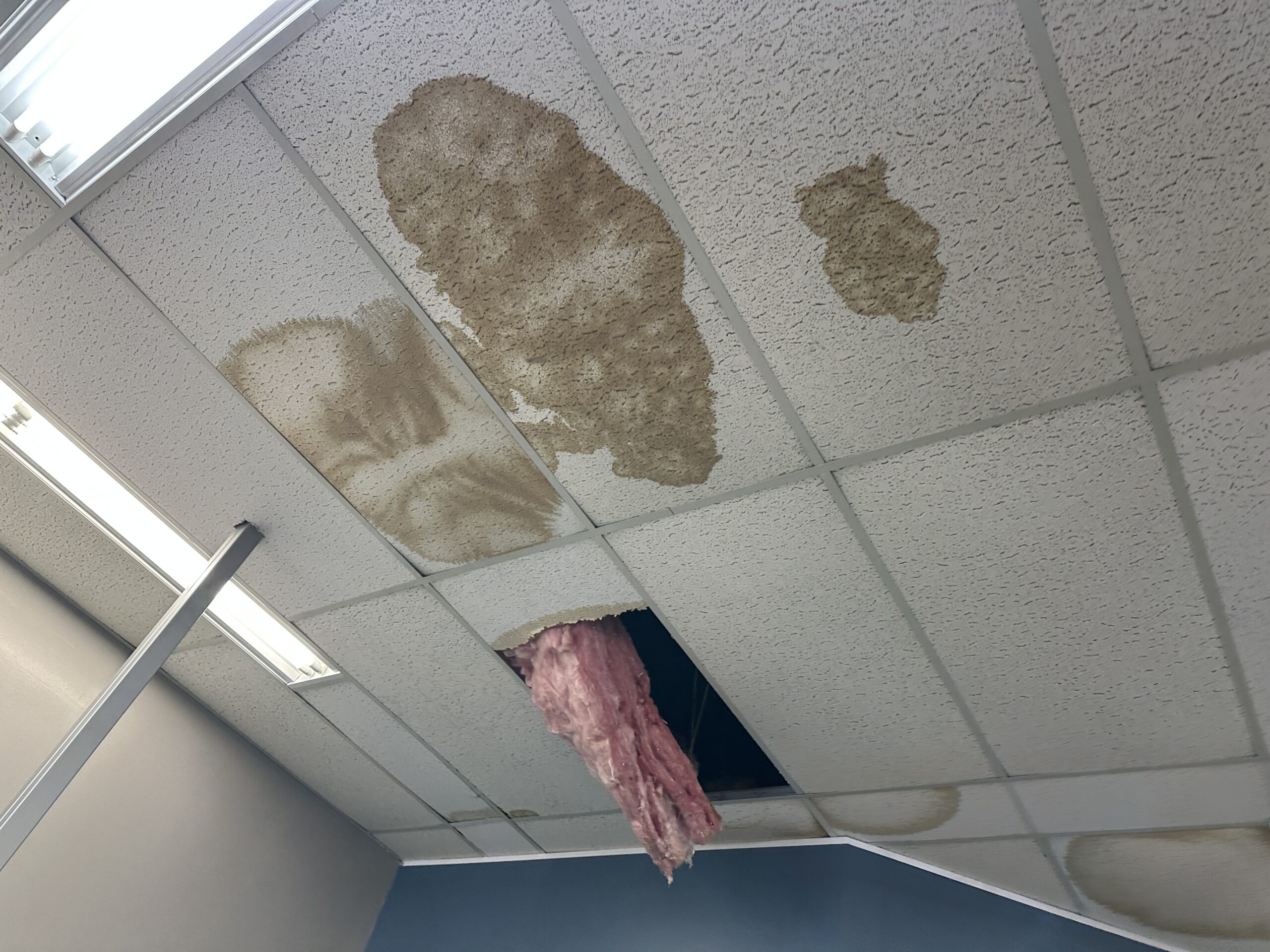
This includes ceiling stains, drips, and wet insulation especially after a storm. If leaks are spreading or recurring, the system is failing. This is not just a small defect.
3) Open or separating seams (TPO/PVC/EPDM)
This includes visible gaps or lifting at seams. This often occurs along edges, penetrations, and long runs. This is one of the most common failure points in hot climates.
4) Saturated insulation (hidden but critical)
One of the signs is if the roof feels “spongy” when walked. This is water trapped under the membrane. Once insulation is wet the R-value is gone, mold increases, and a full replacement is usually required.
TIER 2 – “LATE STAGE DETERIORATION”
5) Blistering / Bubbling
You will see raised bubbles in the membrane. This is caused by trapped moisture or air. In Georgia heat these expand, crack, and leak.
6) Cracking / Alligatoring (Especially Mod Bit / BUR)
The surface will appear dried out and brittle often resembling an alligators rough and tough skin. The material is breaking down from heat and UV and will show a spiderweb cracking pattern.
7) Flashing Failures
Usually occurs around HVAC units, vents, and skylights. Other signs include loose flashing and sealant deterioration. Most flat roof leaks start here.
8) Membrane Shrinkage (EPDM especially)
The roof will pull away from edges or penetrations. This will lead to tension at seams and eventual tearing.
TIER 3 – “EARLY WARNING SIGNS
9) Frequent repairs in the same area
One red flag is patching the same leak multiple times. You’re treating symptoms, not the system.
10) Drainage issues
Drainage issues include slow drains, debris buildup, and overflow during storms. The Georgia rain will expose this quickly.
11) Discoloration or biological growth
This includes algae, mold, and dark streaking. The symptoms are easy to identify and indicates chronic moisture and poor drying conditions.
12) Granule loss (BUR / Mod Bit)
This is caused by heavy UV, rain, and humidity. Roofs with these conditions often look okay right before they fail. This means that visual inspections of your flat roof alone is not enough. At this point a moisture scan is critical.
Conclusion
If your flat roof is 15+ years old and has 2-3 of these signs you’re likely in replacement territory. If your flat roof is 20+ years old and even minor issues occur it’s at high risk for failure.
Common Patterns in Georgia
-TPO seams fail around 12-18 years
-Ponding water turns small defects into major leaks
-Flashing failures cause 80% of leaks
-“Repaired to death” roofs that should’ve been replaced years ago
Quick Field Checklist (what to look for fast)
If you walk a roof a see:
– Standing water
-Open seams
-Soft spots
– Multiple patches
– Cracking membrane
That roof is on borrowed time and it would be wise to contact the experts at Whitco for a complimentary roof assessment.